A commercial fire alarm system has to do more than just make noise when there’s smoke. To pass inspection in Texas, it has to meet specific code requirements, be installed by licensed professionals, and perform reliably under testing conditions that go well beyond a quick battery check. If you’re a business owner in Corpus Christi, Rockport, Portland, Kingsville, Alice, or anywhere across the Coastal Bend, understanding what inspectors are actually looking for can save you from costly delays, failed inspections, and the kind of liability exposure nobody wants to think about.
Why Inspections Are More Than a Formality
Local fire marshals and inspectors aren’t there to give your system a gold star. They’re verifying that your fire alarm system would actually protect people in an emergency. That means every detector, pull station, horn, strobe, and control panel gets scrutinized. If a single component is missing, improperly placed, or incompatible with the rest of the system, the inspection fails. It’s that straightforward.
For commercial properties especially, the stakes are high. State and local codes in Texas follow the National Fire Protection Association standards, most notably NFPA 72, which outlines how fire alarm systems must be designed, installed, tested, and maintained. Inspectors know this document well, and your system needs to match it.
What Inspectors Actually Check
The inspection process covers several layers of your system. Here’s what typically comes under review: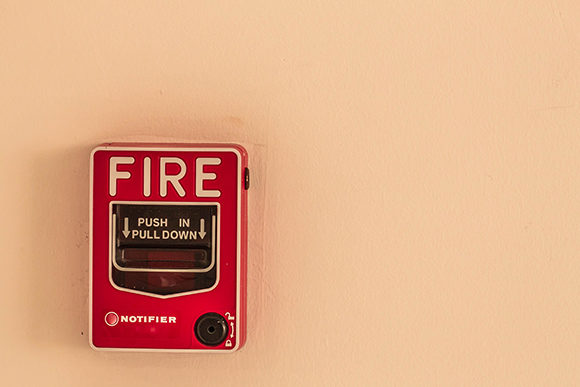
Device placement and coverage. Smoke detectors, heat detectors, and pull stations must be positioned according to code. Ceiling height, room size, and occupancy type all factor into where devices go and how many are required. A device that’s two feet off from where it should be can trigger a violation.
Audibility and visibility. Every occupiable area needs to hear and see the alarm. Inspectors will measure sound levels and confirm that strobe lights meet the spacing and candela requirements laid out in NFPA 72. If people in a back office or a loud production floor can’t perceive the alarm, the system doesn’t pass.
Panel and wiring integrity. The control panel is the brain of the system, and it has to be installed, labeled, and programmed correctly. Wiring must be run in a way that maintains circuit integrity even if part of the building is compromised by fire. Inspectors check for proper supervision of circuits, which means the system monitors itself for faults and reports them.
Central monitoring connection. In most commercial applications, your system must be connected to a 24-hour monitoring center that notifies the fire department automatically. Having monitoring in place and documented is a core inspection requirement, not an optional upgrade.
Documentation and licensing. Inspectors will ask for as-built drawings, equipment listings, and proof that the installing company holds the appropriate state licenses. In Texas, that means a valid Fire Alarm License. We carry Fire Alarm License ACR-1103, so our customers in Corpus Christi and throughout South Texas have that documentation ready to hand over without any scrambling.
Where Systems Commonly Fall Short
After decades of installations across the Coastal Bend, we’ve seen a few patterns in why systems fail their first inspection. Outdated equipment that no longer meets current code is one of the most common culprits, particularly in older commercial buildings that haven’t had a system review in years. Unlicensed or out-of-state contractors who aren’t familiar with Texas-specific requirements leave behind work that looks fine on the surface but falls apart under scrutiny.
We also see businesses in Kingsville, Alice, and Portland that purchased a system somewhere else and assumed it was good to go, only to find it wasn’t configured correctly for their building layout or occupancy classification. A fire alarm system is not a plug-and-play product. It’s a life-safety system, and it has to be designed and installed with your specific building in mind.
How to Set Your Business Up for a Clean Inspection
The simplest approach is to work with a licensed local company from the start, one that knows the code, knows the inspectors, and has a track record of getting systems approved in your area. We’ve been doing this since the 1990s, and our commercial clients across Rockport, Corpus Christi, and the surrounding Coastal Bend region know they can count on us to handle the details from system design through inspection sign-off.
We also offer free consultations, so if you’re unsure whether your current system would hold up to an inspection, there’s no cost to find out. Give us a call or drop us an email and we’ll be glad to take a look and tell you honestly where things stand.