
If you’ve been thinking about adding home security cameras to your property, one of the first questions you’ll face is where to actually put them. Placement matters more than most people realize. A camera aimed at the wrong spot, or mounted too high to capture a clear face, gives you a false sense of protection without much real-world benefit. Having installed security systems across Corpus Christi and the surrounding Coastal Bend area since the 1990s, we’ve learned a lot about what works and what doesn’t. Here’s a practical guide to help you get the most out of every camera you install.
Start with the Entry Points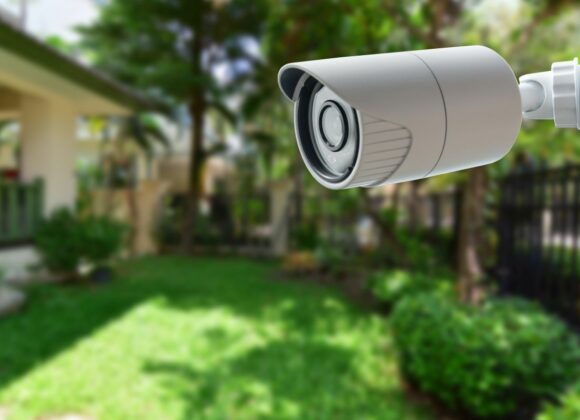
The majority of break-ins happen through a front door, back door, or first-floor window. That’s where your cameras should be focused first. A camera positioned to cover your front door should be mounted high enough to avoid easy tampering but angled down enough to capture a clear image of anyone standing at the threshold. Aim for roughly eight to ten feet off the ground as a general rule of thumb.
Don’t overlook side gates, back yards, and garage entries. Homes in areas like Rockport and Portland often sit on larger lots with multiple access points, and it’s easy to focus all your attention on the front while leaving a side entrance completely unmonitored. Walk your property and think like someone who shouldn’t be there.
Cover the Areas Where Visibility Is Limited
Cameras do double duty: they record what happens, and they discourage activity before it starts. With that in mind, pay attention to spots with poor natural visibility, corners of the yard blocked by fencing or landscaping, detached garages, carports, and dark stretches of driveway. If you can’t easily see an area from inside your home, a camera probably belongs there.
For customers in Kingsville and Harlingen, where properties sometimes include outbuildings, workshops, or agricultural structures, we often recommend extending coverage beyond the main residence. A camera on a workshop or barn adds meaningful protection without a complicated setup.
Think About Indoor Cameras Too
Outdoor coverage is the priority, but indoor cameras have real value as well, particularly for households with young children, elderly family members, or frequent visitors like contractors or housekeepers. Common indoor placements include main living areas, stairways, and hallways that connect sleeping areas to the rest of the home.
Privacy matters here, and we always encourage homeowners to be thoughtful. Cameras belong in common spaces, not bedrooms or bathrooms. If you’re unsure where the line is, that’s a great conversation to have with us before installation.
Avoid These Common Mistakes
A few placement errors come up again and again, and they’re easy to avoid once you know what to look for.
- Pointing cameras directly at a light source. Mounting a camera so that a streetlight or the sun sits in the background will wash out your footage and make faces nearly impossible to identify.
- Placing cameras where they can be easily reached. A camera someone can grab or redirect by hand isn’t doing much good.
- Forgetting about Wi-Fi range. For wireless cameras, signal strength matters. A camera tucked into a far corner of the property may not maintain a reliable connection.
- Overlooking overlapping fields of view. Gaps between camera angles create blind spots. Ideally, adjacent cameras should share a small overlap so there’s no coverage gap between them.
Remote Monitoring Makes It All Work Together
A well-placed camera system becomes even more useful when you can check in from anywhere. We set up our customers with the Total Connect App, which lets you view live and recorded footage right from your phone. Whether you’re at work in Corpus Christi or traveling well outside the area, you stay connected to what’s happening at home. Paired with our 24-hour monitoring solutions, it’s a genuinely complete setup.
Good placement is the foundation, but having a licensed professional handle the installation means the angles, mounting heights, and overall coverage map are optimized from the start. Our Burglar Alarm License (B-7787) and years of hands-on experience across residential, commercial, and government properties mean we’re not guessing at what works.
If you’d like a free consultation to walk through your property and figure out the right placement for your situation, we’d love to help. Give us a call or drop us an email and we’ll get something scheduled at your convenience.